Caring for a historic property means understanding those materials first, then choosing a method that cleans without causing damage.

Historic District Exterior Care Guidelines

Homes and buildings in Charleston, South Carolina’s historic district, weren’t built with modern cleaning methods in mind. Wavy glass, historic brick, old mortar, wood siding, wrought iron, and hand-applied stucco respond differently to cleaning than the materials found on newer construction.

Caring for a historic property means understanding those materials first, then choosing a method that cleans without causing damage.

Why Pressure Washing Isn't Right for Every Historic Surface

High-pressure cleaning can force water into old mortar joints, strip protective finishes, and etch or erode soft, porous materials. On a historic property, damage from the wrong cleaning method isn’t always something that can be undone.

Many properties within Charleston’s historic district are also subject to local preservation and architectural review considerations, which is another reason exterior work should be approached carefully rather than treated the same way as a newer property.

Hand Cleaning and Soft Washing for Delicate Materials

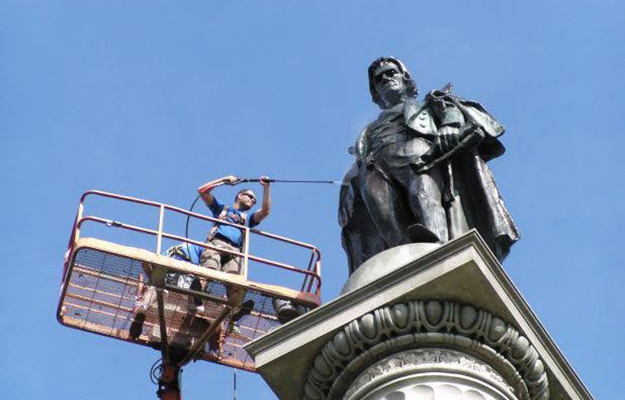
Ambassador Window Cleaning and Maintenance uses soft washing and hand cleaning on the surfaces that call for a gentler approach, reserving higher-pressure methods only for the durable materials that can safely handle them.

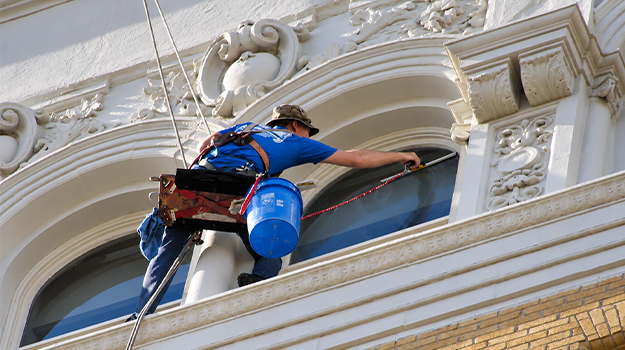
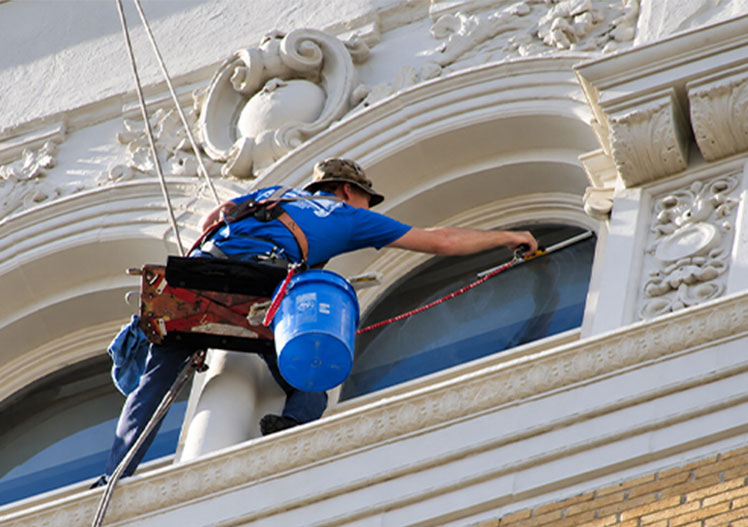
  • Windows and glass: Hand cleaning protects original glass, glazing, and window hardware.
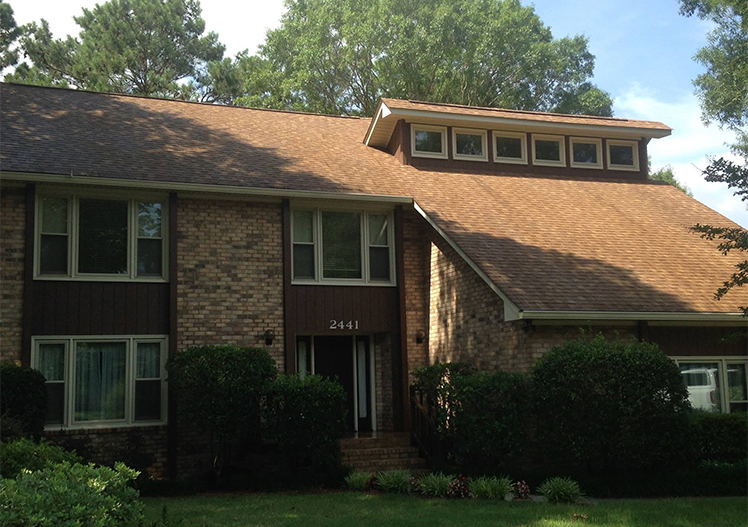
  • Siding, stucco, and masonry: Soft washing lifts dirt, mildew, and organic growth without forcing water into vulnerable joints or finishes.
  • Roofs: A controlled, surface-specific approach to roof cleaning protects older roofing materials.
  • Gutters: Gutter cleaning that accounts for older gutter systems and their attachment points.

Understanding
Historic Materials

Historic buildings in Charleston are often built from materials that are more porous, more fragile, or simply more irreplaceable than modern equivalents.

Original window glass
Original window glassOlder, hand-blown, or early-manufactured glass can be thinner and more delicate than modern panes.
Soft brick and historic mortar
Soft brick and historic mortarOlder brick and mortar can be more porous and more easily eroded by aggressive cleaning methods.
Wood siding, shutters, and trim
Wood siding, shutters, and trimOriginal wood elements can be more vulnerable to water intrusion and surface damage than newer materials.
Wrought iron and architectural metalwork
Wrought iron and architectural metalworkGates, railings, and fixtures often carry decades of patina that shouldn't be removed improperly.
Stucco and tabby finishes
Stucco and tabby finishesThese historic finishes can crack or erode under high-pressure cleaning.

Preserving Curb Appeal in
Historic Neighborhoods

Piazzas, iron gates, shutters, and street-facing facades are all character-defining features. Keeping them clean, without altering their finish or accelerating wear, protects both the property’s appearance and its long-term condition.

Regular, carefully planned maintenance also makes it easier to catch small issues, like failing caulking or early wood rot, before they become larger repairs.

A Measured, Preservation-Minded Approach

With more than 25 years serving Charleston-area properties, Ambassador approaches every historic home or building individually, assessing its materials, condition, and exposure before recommending a cleaning method.

Work is planned, coordinated, and carried out with the same care whether the property is a single historic residence or a row of buildings along a historic street.

Piazzas, iron gates, shutters, and street-facing facades are all character-defining features. Keeping them clean, without altering their finish or accelerating wear, protects both the property’s appearance and its long-term condition.

Regular, carefully planned maintenance also makes it easier to catch small issues, like failing caulking or early wood rot, before they become larger repairs.
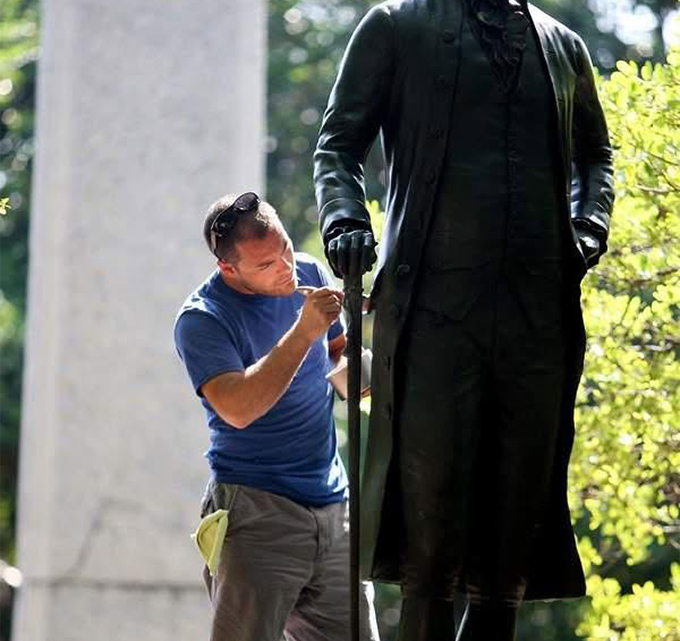
With more than 25 years serving Charleston-area properties, Ambassador approaches every historic home or building individually, assessing its materials, condition, and exposure before recommending a cleaning method.

Work is planned, coordinated, and carried out with the same care whether the property is a single historic residence or a row of buildings along a historic street.

Frequently Asked Questions About Soft Washing in Charleston, SC

It can be on select durable surfaces, but many historic materials require soft washing or hand cleaning instead. A property assessment helps determine the right method for each surface.

Yes, if the wrong method is used. Older, softer brick and historic mortar can be eroded by high-pressure cleaning, which is why a gentler approach is often recommended.

Yes. Original and older window glass is cleaned by hand to reduce the risk of damage to fragile or historic panes.

It depends on the property’s materials, exposure, and surrounding trees or landscaping. A property assessment can help determine an appropriate schedule.

Cleaning is approached carefully to remove dirt and grime while protecting the existing patina and finish of historic metalwork.

Many properties are subject to Charleston’s preservation standards, so exterior work should be planned with the property’s historic materials in mind.

Yes. Ambassador provides exterior cleaning and maintenance for both historic residences and commercial properties throughout the Charleston area.

Request a Free Estimate

If your historic Charleston home or building needs a cleaning plan built around its materials, request a free estimate from Ambassador Window Cleaning & Maintenance.

Request a Free Estimate Call Us