

Ambassador Window Cleaning and Maintenance helps commercial properties, managed communities, and residential estates prepare the exterior with the right service for each surface. The work is planned, coordinated, and carried through with minimal disruption.

Storm and Hurricane Preparation Checklist

Hurricane season places the most pressure on the parts of a property that are already exposed: rooflines, drainage, windows, doors, exterior walls, walkways, and landscape. A sound storm prep plan starts before severe weather is in the forecast.

Ambassador Window Cleaning and Maintenance helps commercial properties, managed communities, and residential estates prepare the exterior with the right service for each surface. The work is planned, coordinated, and carried through with minimal disruption.

Review the Property Before Hurricane Season Begins

Start with a property walkthrough. Note where water collects, which elevations carry the most debris, and where access will become difficult in hurricane conditions. Photograph visible issues so the pre-storm condition is documented.

  • Check rooflines, gutters, downspouts, and drainage paths.
  • Inspect windows and doors for damaged screens, cracked glass, worn caulking, or gaps around frames.
  • Identify dead branches, loose outdoor items, and tree limbs near the roof or glass.

For commercial properties, assign responsibility before the storm season begins: who handles tenant communication, who coordinates the site, and which qualified vendors should be called if an issue needs attention.

Clear Gutters and Direct Water Away From the Building

Clean gutters are one of the most practical parts of hurricane preparation. Leaves, roof grit, and nesting material can block drainage and force water over the gutter, behind it, or toward the building.

  • Clear gutters and confirm that downspouts direct water away from foundations, entrances, and occupied areas. Note sagging sections, loose brackets, separated joints, and overflow marks. Those conditions may require more than routine gutter cleaning.
  • On larger properties, gutter work should be coordinated around access, pedestrian traffic, and roof conditions. Ambassador provides commercial and residential gutter cleaning and protection with the same management-led approach used across every exterior service.
Check the Roof
and Flashing

Before hurricane season, check flashing, roof valleys, penetrations, and visible roof edges for debris, algae, moss, missing shingles, or branches against the roof.

  • Organic buildup and trapped debris hold moisture in place, making it harder to see the actual condition of the surface.
  • A roof should not be aggressively pressure washed as storm prep. Shingles, tile, metal, and other roof materials require the right method.
  • When cleaning is appropriate, Ambassador uses a controlled, surface-specific approach to roof cleaning.
Inspect Windows, Doors, and
Exterior Transitions

Windows and doors should be visible and accessible before a storm hits. Clean glass makes it easier to inspect windows, frames, glazing, and surrounding sealant for staining, cracks, or deterioration.

  • Pay close attention to caulking and glazing around windows and doors. Wind-driven rain can find failed joints and aging transitions around glass, panels, and exterior walls. Ambassador’s commercial waterproofing, sealing, caulking, and glazing work is designed to address those areas with the right access and scope.
  • Storm shutters, roof repairs, and structural concerns should be handled by the appropriately qualified provider. Our role is exterior cleaning and maintenance: evaluating the visible conditions, preparing the surfaces, and helping keep the property ready for the next required step.
  • A post-storm inspection can help identify problems before they have more time to develop.
Prepare Hardscapes, Awnings, and Exposed Equipment

Entrances, walkways, loading areas, patios, and parking surfaces collect pollen, silt, organic growth, and debris. Before severe weather, keep drains and low points clear and address slippery buildup where people enter, exit, and work.

  • Concrete, brick, and certain durable hardscapes may benefit from controlled pressure washing.
  • Glass, roofs, painted surfaces, awnings, and delicate materials require another method. The right approach protects the property rather than creating a second maintenance issue.
  • Solar panels, awnings, fixtures, and architectural panels should be evaluated according to their material, condition, and access requirements.
After
the Storm

Once it’s safe to return, document the property before routine cleanup begins.
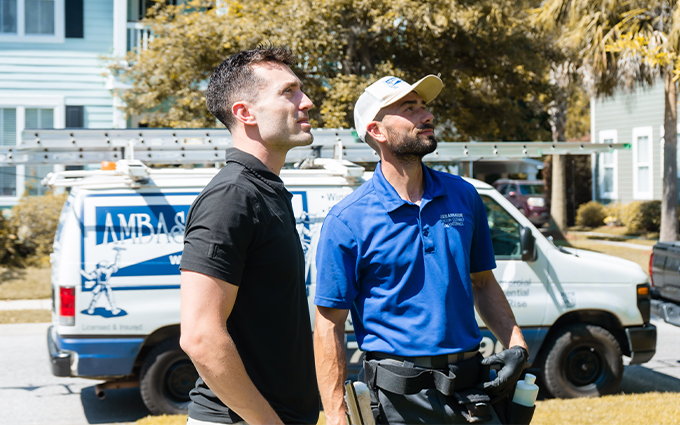
  • Look for standing water, gutter overflow, debris, wind damage, damaged windows, missing shingles, and changed conditions around rooflines and exterior walls.
  • Do not assume every surface needs the same response.
  • A roof may need an assessment, gutters may need clearing, windows may need cleaning to reveal damage, and hardscapes may need a controlled wash.
  • A measured follow-up plan helps property managers protect the asset and recover faster.

A Managed Approach to Storm and Hurricane Preparedness

For more than 25 years, Ambassador has maintained Charleston-area commercial properties, businesses, and residential estates. Our clients rely on clear communication, reliable scheduling, trained technicians, and hand cleaning where it matters most.

Whether the property needs window cleaning, gutter cleaning, roof cleaning, soft washing, commercial pressure washing, or specialty exterior maintenance, we assess the surface, exposure, access, and use of the property before recommending a plan.

Frequently Asked Questions

Start before hurricane season is active, then repeat a shorter review when severe weather is forecast. Early preparation gives you time to schedule qualified service instead of reacting at the last minute.

No. Pressure washing is appropriate for certain durable surfaces. Roofs, glass, painted finishes, siding, and other materials may require soft washing, hand cleaning, or another controlled method.

Clean, visible windows and doors make it easier to spot cracked glass, damaged screens, worn sealant, and other exterior conditions before storm or hurricane-force winds and rain expose them.

The right interval depends on tree cover, roof design, and how debris moves across the property. At minimum, schedule a seasonal review and plan additional service after major debris periods or a significant storm.

A hurricane checklist should cover gutters and downspouts, rooflines, windows and doors, drainage areas, exterior walls, hardscapes, landscaping, and loose outdoor furniture.

Before high winds arrive, remove or secure loose exterior items, clear debris from drainage areas, inspect accessible rooflines and gutters, and check windows, doors, awnings, and exterior fixtures for visible concerns.

Yes. Photos can create a record of the property’s pre-storm condition, including windows, doors, roofing, exterior walls, gutters, landscaping, and other exposed areas. If damage occurs during a hurricane or other natural disaster, this documentation may also be useful when discussing the loss with your insurance provider.

Check the property for damaged windows and doors, displaced roofing materials, clogged or damaged gutters, standing water, blocked drainage, fallen debris, exterior wall damage, and changes around walkways or other high-traffic areas. Avoid damaged or unstable areas and bring in the appropriate professional help when structural, electrical, roofing, or other safety concerns are present.

Ambassador provides planned exterior cleaning and maintenance. Structural, roofing, electrical, and emergency repair concerns should be handled by the appropriate qualified professional. Once conditions are safe, we can help with the exterior cleaning and maintenance scope.

Request a Free Estimate

Request a free estimate from Ambassador Window Cleaning and Maintenance for exterior cleaning and maintenance planned around your property, its surfaces, and its schedule.

Request a Free Estimate Call Us